The results of the study provide new evidence to understand the evolution and future risks of the Mediterranean coastal areas
An international study coordinated by theUniversity of Bari, in collaboration with important national and international research institutions, has reconstructed extreme marine weather events that occurred approximately 125.000 years ago along the coasts of southeastern Sicily. The results, published in the scientific journal Quaternary Science Reviews, offer new perspectives for understanding the evolution and future risks of Mediterranean coastal areas.
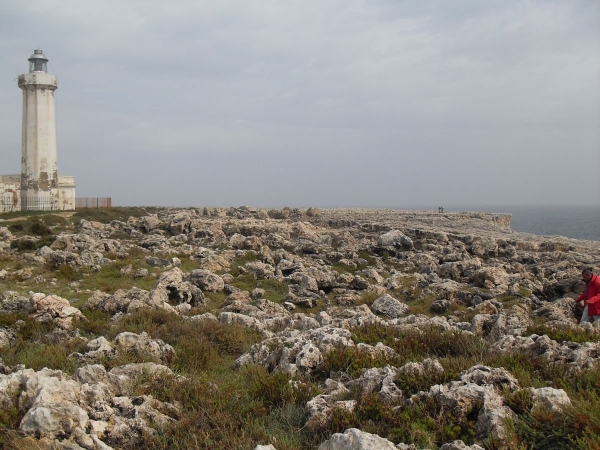
The work, conducted by Department of Earth and Geoenvironmental Sciences, University of Bari together withCa 'Foscari University of Venice, All 'National Institute of Geophysics and Volcanology (INGV), al National Research Council – Institute of Atmospheric Sciences and Climate (CNR-ISAC) andUnited Arab Emirates University, focused on a coastal site of exceptional interest located on the Maddalena Peninsula, within the Plemmirio Marine Protected Area (Syracuse). The site is notable for the presence of enormous rock blocks, weighing several tons, transported in the past by high-energy waves. These boulders are now located on a very steep slope, at high altitude and a considerable distance from the current coastline, a configuration that testifies to exceptional sea and weather conditions.
"GStudies conducted by researchers at the INGV, in collaboration with other research institutions and universities, have highlighted the presence of marine deposits attributable to extreme events that occurred approximately 125.000 years ago, in a climatic context different from the current one". explains John Scardino, first author of the work and INGV researcher, together with INGV researchers Thomas Alberti e Marco Anzidei. “The study of past climate conditions integrated with geological deposits allows us to estimate possible future implications, in a context of global warming of the seas and ongoing climate changes.”
“This context is extremely rare in the Mediterranean”, explains the professor John Scicchitano, scientific director of the study. “The combination of the position of the blocks, their state of preservation, and the precision of the chronological framework makes the Plemmirio one of the best examples available for studying extreme events of the past.”
Unlike high-energy ocean environments, such as the Caribbean or the North Atlantic, where similar deposits are more widespread, the Mediterranean offers very few comparable cases, making this site particularly valuable to the scientific community.
Using an integrated approach combining high-resolution geomorphological surveys, paleogeographic reconstructions, and numerical hydrodynamic and climate modeling, the research team reconstructed the conditions responsible for the transport of the blocks. Simulations demonstrated that these deposits are not attributable to recent or historical tsunamis of extraordinary intensity. Rather, they are consistent with extreme storms that occurred during the last interglacial (Tyrrhenian), when the global climate was warmer and sea levels higher than today. In that environmental context, higher sea levels allowed waves to more easily overcome cliffs, amplifying coastal flooding processes and permitting the transport of large blocks inland.
One of the most innovative aspects of the study concerns its relevance for the present and future. The Tyrrhenian represents a possible natural analogue of the climatic conditions toward which the Mediterranean is evolving.
“Our simulations indicate that higher sea temperatures and different atmospheric conditions could have generated more intense storms and medicanes than today.”, underlines Scicchitano. “This helps us understand how ongoing warming may influence marine weather events in the coming decades.”
Climate projections indicate a further increase in Mediterranean water temperatures and a rise in sea levels by the end of the century, conditions that could amplify risks along the coasts.
The Plemmirio Marine Protected Area played a key role during the research team's various field surveys, actively supporting operational activities. This contribution is part of a long-standing collaboration with the University of Bari, aimed at studying extreme marine weather events along the Plemmirio coast.
“The protection of the marine environment must also include the emerged coastal strip, which preserves fundamental traces of natural history”, he claims Patrizia Maiorca, president of the Plemmirio Marine Protected Area. “This study demonstrates how important it is to integrate conservation and scientific knowledge to understand ongoing changes and prepare for future challenges.”
Useful links:
National Institute of Geophysics and Volcanology (INGV)
University of Bari
 Sezioni