Sezioni




Native
| 30/09/2026


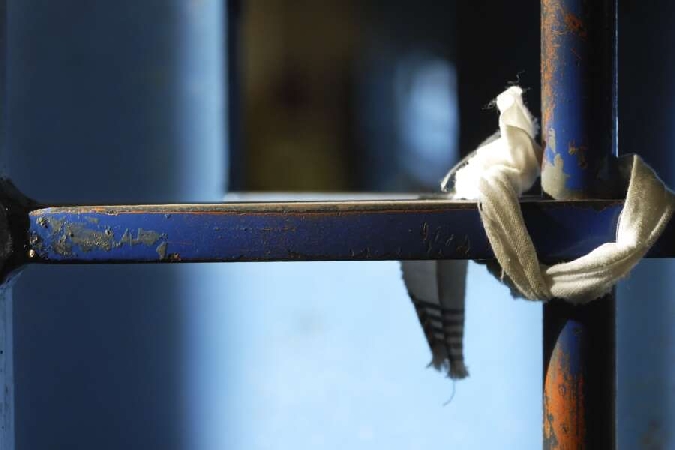
In the span of just a few hours, two inmates took their own lives at Rebibbia prison in Rome. A woman was found hanged, followed shortly after by a man who died in the same way. These tragedies unfold in the silence of the institutions. The national government does not even attempt to stop what has become a never-ending massacre.
Italy’s prison system is facing an overcrowding emergency. Gennarino De Fazio, general secretary of the penitentiary police union UILPA, expressed deep concern: “In just five days during the mid-August holiday period, we witnessed five escapes,” he said. “And suicides have become a daily occurrence. Yet the government remains silent and refuses to implement any concrete measures.”
Cuffaro: The State Must Be Humane
Totò Cuffaro, leader of Democrazia Cristiana and former inmate himself, shared his reflections on the prison system—not just from experience, but from a deep understanding of the human toll of incarceration. He described a penal system that strips away dignity, fails to rehabilitate, and reduces individuals to nothing more than numbers—the years left to serve and the crimes committed. Hope and future are annulled.
Cuffaro painted a vivid picture of prison life:
“The cell is four meters by four, three bunk beds on one wall, another on the opposite wall, and a table in the middle with a narrow path to walk. Four steps from the barred window to the barred door, and back again—hundreds of times. Sometimes the steps are smaller: eight to the door, eight back. One, two, three, four—again and again. Hands behind the head, arms wide, arms raised, arms crossed, fingers pointing toward the window. Then suddenly, there she is—the moon, filling the entire window, sweet and luminous, smiling at us. She offers her tenderness, her company, her desire for freedom. She visits only those who have a window facing her, but her desire for freedom is for all. The moon is for everyone—it’s always the same, no matter where you are or who you are with. For us, it smells of freedom and carries the love of those who still care for us.”
Cuffaro speaks directly to inmates—to those who must serve their time, but should not lose their humanity:
“Justice must be just, and the State must be humane. It should allow prisoners—those who can—to see the whole sky, with the moon and stars. Now that I can finally see the night sky again, I understand its beauty, and the smell of freedom it carries. Many will soon see it again too. And to those who cannot, or never will, I say: you are not alone. Don’t lose hope. Don’t stop dreaming. Reach for the sky—it’s yours too.”
Three Prison Officers Attacked in Agrigento
At the Pasquale Di Lorenzo prison in Agrigento, three prison officers were attacked by two inmates. The regional union representatives Nicolò Lauricella (SINAPPE), Gioacchino Veneziano (UILPA Penitentiary Police), and Francesco D’Antoni (USPP) had previously warned the regional superintendent, Maurizio Veneziano, about the dangerous conditions at the facility.
“We’ve seen an escalation of aggression by two Italian inmates held for common crimes,” the unions said. “For trivial and pretextual reasons, they assaulted and injured three officers.” The officers were taken to the emergency room in Agrigento: two were given 14-day prognoses, and one, with an eyebrow arch injury, was given 8 days. The unions demand serious disciplinary actions against the attackers and once again call on the superintendent to intervene directly and address long-standing union concerns raised at the regional level.
Our Lady’s Pilgrimage in Italian Prisons
On July 1st, a unique spiritual journey began at the Arghillà prison in Reggio Calabria. Organized by the International Apostolate of Fatima, the pilgrimage of a statue of the Virgin Mary ended on August 31st in Verona. The initiative was specifically scheduled in the summer—the hardest time for prisoners, marked by a lack of activities, isolation from loved ones, and oppressive heat.
The inspiration came from Spes non confundit, Pope Francis’ papal bull proclaiming the 2025 Jubilee Year of Hope, in which he called for a concrete gesture of solidarity with prisoners.
Accompanying the statue was the “Guitar of the Sea,” made from wood salvaged from the wrecks of migrant boats that sank near Lampedusa. It was built in the woodworking workshop inside the Secondigliano prison in Naples, as part of the “Metamorfosi” project run by the Casa dello Spirito e delle Arti (House of the Spirit and Arts).
È una delle forme più comuni di comunicazione locale. Esci di casa al mattino e trovi un foglio attaccato accanto all’ingresso: l’acqua verrà interrotta, sarà vietato parcheggiare, sono...

Inaugurazione sabato 26 settembre alle 18:00, in piazza G. Marconi 8. La rete nazionale di assistenza domiciliare, attiva dal 1993, apre un nuovo punto di riferimento per famiglie, anziani e persone fragili del...